
Steve Connell

Steve Connell spent over 17 years working in the finance sector and has experience in a range of financial markets from foreign exchange, commodities to options and futures.

Can You Trade More Profitably Without Stop Losses?
Trading without stop losses might sound like the riskiest thing there is. A bit like going mountaineering without safety gear. But what's the reality?

Bid Ask Spread – What it Means and How You Can Use It
To make any market there need to be both buyers and sellers. The bid and offer prices are simply the prices at which other buyers in the market are willing to buy and sellers are willing to sell.

Value at Risk: How to Calculate Forex Risk
To manage this risk, what some do is make a simple guess to estimate the potential loss involved.The problem though is this doesn't take the full picture.

What are the Alternatives to the Yen Carry Trade?
The carry trade has a simple aim: Borrow low and lend high. Japanese yen is often the borrowed currency in carry trades. This is because it’s cheap.
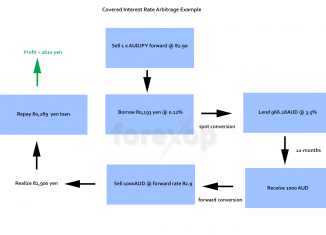
Covered and Uncovered Interest Arbitrage Explained with Examples
With covered interest arbitrage, a trader is looking to exploit discrepancies between the spot rate and the futures or forwards rate of two currencies. This allows the trader to borrow or lend at below market or above market rates respectively.

How to Spot an Overbought or Oversold Market
If markets were completely logical and responded only to hard facts we’d see them moving more or less in straight lines with a few jumps here and there when new information arrives.

Day Trading with Pullbacks – Thinking Ahead of the Crowd
One of the ways to succeed in trading is to predict the market by thinking “ahead of the crowd”. When doing this an uptrend can mean a selling opportunity. A downtrend can mean a buying opportunity.

Slippage, Requotes and Unfair Price Execution
Price manipulation allows your broker to make a riskless profit using your money. This means you can receive unfair execution of your trade orders.

The Descending Broadening Wedge
The descending broadening wedge is easily spotted on a chart. It looks like a megaphone with a downwards tilt. It’s equally likely to appear in downtrends as well as uptrends.

Ascending Broadening Wedge Patterns
The ascending broadening wedge is a chart pattern that can be traded in several ways; either as a bullish/bearish breakout or with a swing trading strategy.
 Prev
Prev